The National Herald: Beyond the Recipe: Greek Restaurant Owners Share Their Signature Dishes

Bar Vlaha — Brookline, Mass.
Signature Dish: Moschari me Damaskina
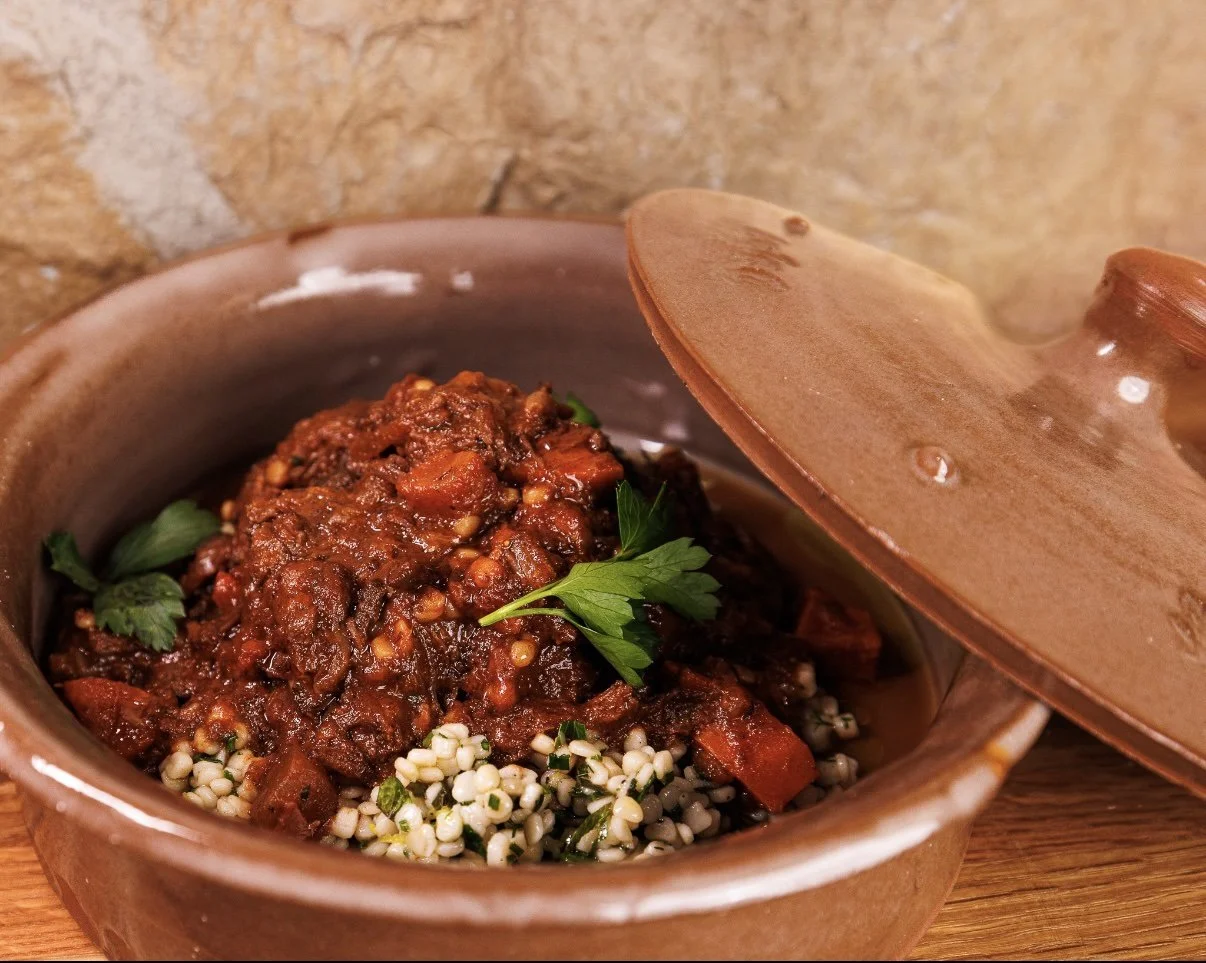
Bar Vlaha’s Moschari me Damaskina features Red wine braised beef cheeks, with prunes and trahanas. (Photo: Courtesy of Jimmy Pineapple)
While many Greek restaurants lean on island cuisines and aesthetics, Bar Vlaha draws on the food traditions of Central and Northern Greece. Located at 1653 Beacon St. in Brookline, MA, this restaurant features charcoal grilling and open-flame roasting, bringing lesser-known culinary traditions of Greece to the greater Boston area.
According to Demetri Tsolakis, CEO of Xenia Greek Hospitality, one of Bar Vlaha’s signature dishes is Moschari me Damaskina (red wine-braised beef cheeks with prunes and trahanas).
“It challenges the idea that Greek food is limited to the islands and the sea and instead celebrates the resourceful and deeply flavorful cooking of mainland Greece,” Tsolakis told TNH.
He traced the dish’s roots to the mountainous regions of Greece, where meals are shaped by both the seasons and pastoral life.
“Pairing meat with dried fruit creates a beautiful balance between savory richness and gentle sweetness,” Tsolakis said. “Trahanas [fermented wheat] adds texture and another layer of Greek culinary history.”
Tsolakis shared the recipe behind his Moschari me Damaskina, where he said humble ingredients are transformed through patience and technique.
“The beef cheeks are slowly braised in red wine until they become tender and nearly fall apart,” he said. “The prunes are cooked into the sauce, adding a subtle sweetness that complements the beef’s richness without overwhelming it.”
The trahanas then absorbs the braising liquid and ties the dish together with a tangy, porridge-like texture.
When asked why customers love Moschari me Damaskina, Tsolakis said because it is both familiar and unexpected.
“It has the warmth and comfort of a traditional braise, but the combination of beef cheeks, prunes and trahanas introduces many of our customers to flavors and ingredients they may not associate with Greek cuisine,” he said. “It is rich, soulful, and meant to be enjoyed slowly.”